
 Posted by
2 countries, 5 days, 8 platforms. That is the short version of my first week of November, in which I returned to the Baltic epicentre of the P2P industry after a little more than two years, with stopovers in Jakarta and Sofia along the way.
More precisely, the trip took me to Riga and to Vilnius, my fourth stay in the Latvian and in the Lithuanian capital respectively. I had originally planned the trip for the summer when I set out my year, but my knee surgery at the end of July pushed the plan back somewhat.
My aim was to find a healthy mix in the selection of platforms, one that would let me get to know new platforms and new people while also meeting familiar faces again. Looking back, I think that worked out rather well. In this travel report, I write about who exactly I met, what we discussed and what impression I came away with.
As always on my trips, I covered the costs entirely myself, despite several offers to help me out financially. If you would like to support my work and my content, feel free to donate or use the affiliate links on my bonus page the next time you sign up with a platform.
LANDE
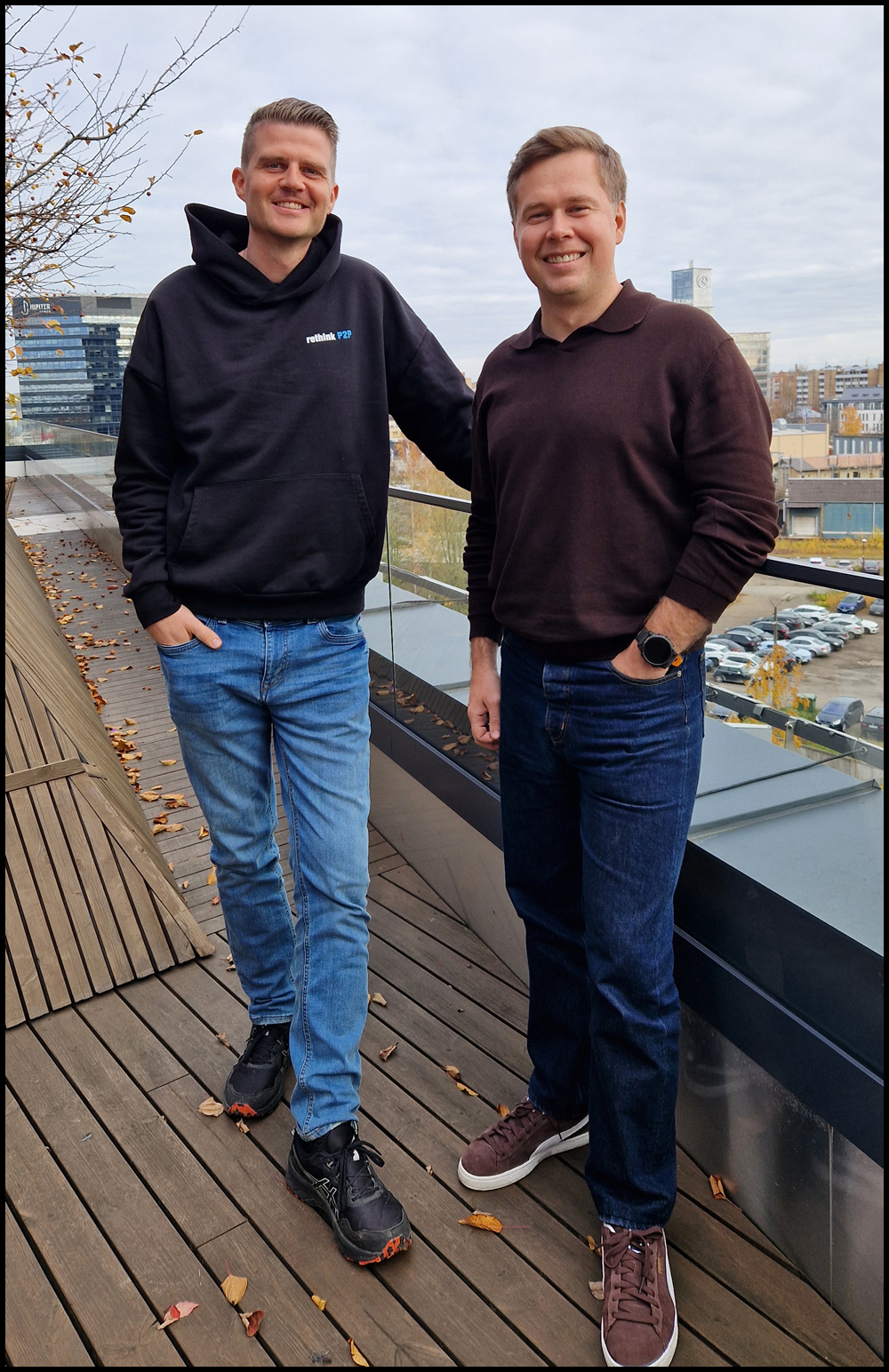
The week started with a visit to LANDE, where I met founder and CEO Nikita Goncars in person for the second time after 2024. Compared with two years ago, he came across as noticeably more relaxed.
Partly because private matters have given him a little more perspective on the importance of supposed “business problems”, and partly because the platform remains on track for the target it set itself last year, namely managing a portfolio of 100 million euros by 2030. In the first ten months of 2026 alone, the portfolio grew from 21 to 33 million euros.
 To reach that 2030 target, LANDE has to grow on two levels. On the funding side, the platform continues to rely on retail investors, who are meant to account for 60 to 70% of total funding. The remainder is to come from institutional money, consisting of funds (Signet Bank) and credit lines with banks. Venture capital, by contrast, was ruled out unambiguously. One reason for that is the required loan volume (50+ million euros was mentioned as an example), which LANDE does not currently want to offer, not least with portfolio quality in mind.
When it comes to growth in their borrower markets, the LANDE CEO sees stagnation and little room for growth in the Latvian home market in particular. That becomes especially clear when you look at acquisition costs across countries. While a qualified lead costs around 10 euros in Poland and Romania, the figure in Latvia has by now reached around 100 euros.
I also found it interesting to hear which constraints the ECSP licence brings in practice. According to Nikita, the crowdfunding licence prevents precisely the product farmers need most urgently: a flexible credit line that matches the cash flow of an agricultural business, which cannot be structured within the licence. As a result, the platform has to push short terms with republication instead, which some investors mistakenly read as a problem.
My assessment: I like the direction LANDE is taking. Since their change in collateral policy, the performance of the loan portfolio has improved noticeably. Experience in the markets is growing, the networks are getting better in both quantity and quality, and the platform has additional information on borrowers and collateral, which should make decisions even better in the future. Driving growth organically and without venture capital assistance is clearly the slower route, but almost certainly the better one, as the agricultural alternative InSoil Finance illustrates as a cautionary example.

New investors receive a €5 Bonus + 3% Cashback on all investments made within the first 30 days after successful registration.
Esketit and Goodeve
In the afternoon, I headed to the second stop of the day to Esketit, only a ten minute walk away. This has been my second visit to their office as well, although I met CEO Ieva Narbute, who has also been managing director of the new Goodeve platform since the summer, for the first time.
We started by talking at length about her dual role as CEO of two platforms, the part publishers play in the growth of platforms, and her view of the Latvian platform landscape, which she has naturally followed fairly closely all along, given she worked for almost ten years at Mintos.

On Esketit, she said that around 80% of the Irish portfolio should be repaid to investors by the end of the year, with the remainder following by the summer of 2027 at the latest. In that context we talked a good amount about the move to Croatia, which she openly conceded had been a mistake, although by her account the decision had already been taken before she joined Esketit.
Whether Esketit will still exist in five years was a question she could not answer clearly.
“I cannot say whether Esketit will be there in five years.”
The future, she said, undoubtedly lies with Goodeve, whose status she compares to a university even before launch, with Esketit as a kindergarten. An interesting metaphor, and one that naturally sets a certain expectation.
The original plan had been to run a licensed and an unlicensed operation on a single platform. Because the Latvian regulator rejected that model, however, the team decided to start the process from scratch. According to Ieva, the licensing procedure for Goodeve with the Latvijas Banka took around fourteen months, accompanied by a core team of eight people, in parallel with running Esketit.
Goodeve is set out to start with asset-backed securities, with further asset classes and new products to be introduced later on. The shareholder-owned lenders will increasingly sit on Esketit in future, although for the start they will also be present on Goodeve in order to get things moving a little faster.
My assessment: After the conversations in Riga, it is clear to me that the future will lie with Goodeve. My own forecast is that Esketit will continue to serve as a vehicle for the two shareholders’ new lending ventures. Once Goodeve approaches Esketit in growth and size, a wind-down of the Croatia-based platform looks like only a matter of time.

Black + Cyber Week from 16 to 30 November in two rounds (until 22.11. and from 23.11.). Separate enrolment is required for each round – only Primary Market purchases made afterwards with newly deposited funds count. The Cashback is a fixed amount per tier: €35 from €1,000, €180 from €5,000, €370 from €10,000 and up to €4,000 from €100,000. Investing at least €1,000 in both rounds adds a 25% combo boost on the total. Claims must be held until 14 December; payout by 18 December.
TWINO
On Tuesday, I went to TWINO. After 2019 and 2024, this was already my third visit to the Latvian P2P platform. A small fun fact: every one of those meetings took place in a different office and with a different CEO.
With CEO Nauris Bloks, I then had what was surely one of the most open and candid conversations of the week. We covered the legacy of the past, consisting of the early years of expansion and what they have cost, the Philippines, Vietnam and the Rentals product, which he would rather see wound down today than tomorrow (“there is no value from this product”).
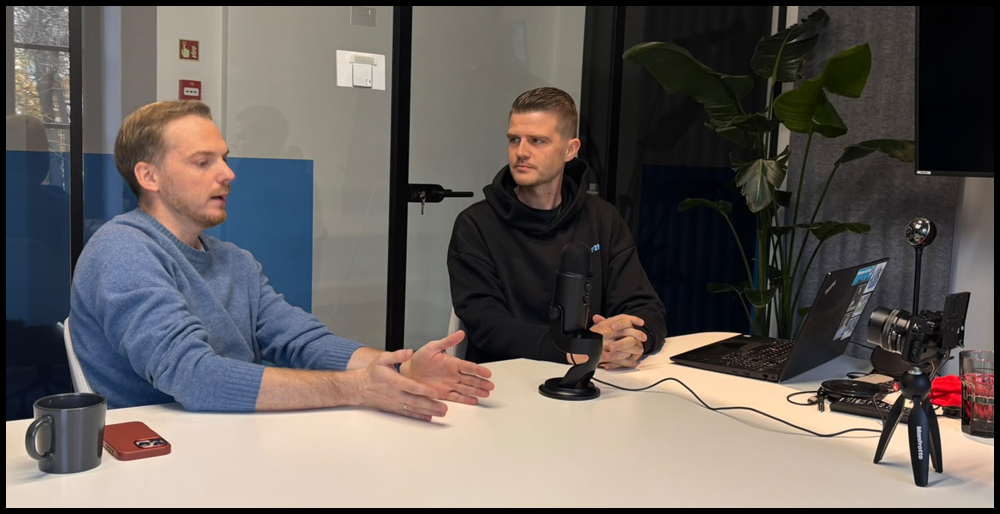
On the current state of play, the focus was mainly on TWINO Flexi, its figures and performance after six months, as well as the limit that has since been announced and raised from 10,000 euros to 100,000 euros.
Another major talking point has been the market developments in Poland and the upcoming implementation of the EU Consumer Credit Directive. On the ongoing proceedings by the Polish consumer protection authority, which I have covered in detail on the blog, the TWINO CEO was fairly sober and confident in his assessment. I noted with interest that the company has decided, partly in response to my article, to set aside a provision of up to 2 million euros for the proceedings, which is to appear in the coming financial statements.
Talking about the future of the platform, we discussed the path towards a banking licence, which is not expected to come into play before 2029. TWINO has made similar efforts in this direction in the past. In 2021, a completed application was already on the table and was stopped internally. Whether it will work out on the next attempt, we shall see.
My assessment: Over the past few months, I have often spoken positively about TWINO. The reason is closely tied to Nauris Bloks, who has achieved a good deal of progress since taking over as CEO (winding down the Russian and Philippine legacy positions without capital losses, the first Twino Rentals sales, the introduction of TWINO Flexi). With the market entry in the Czech Republic there will hopefully be further alternatives on the platform in future. As always, though, TWINO’s fate depends heavily on shareholder Armands Broks (whom I was also able to meet briefly) and the direction he sets. For me, TWINO remains a firm anchor in my portfolio for now.

New investors receive 2% Cashback on TWINO Flexi investments up to €10,000 (maximum €200). Important: after registering, first enroll in the campaign via your profile – only Flexi investments made afterwards count. The investment must be held for 90 days; the Cashback is paid out after the holding period ends.
Nectaro
On Wednesday came my last official meeting in Riga, where I was able to talk with Nectaro CEO Sigita Kotlere. As with LANDE and Esketit, this was my second meeting with the platform on site after 2024. We began with a chat about the current state of the platform. On the occasion of Nectaro’s third birthday this month, we reviewed the performance so far, and I was told that they intend to give themselves and their investors a present in the form of a new app.
Unlike many other CEOs, who are happy to play the full keyboard of PR-friendly statements on regulation, Sigita spoke fairly open about what a licence can deliver and what it expressly does not. That should be clear to most investors anyway, but hearing it put that way by someone in charge is rather rare.
“A licensed platform will not protect investors’ money like 100%.”
The Nectaro CEO went one step further and said that the company sees no commercial value in licensing either, and that it does not bring in any new customers. Whether that is actually the case in reality is of course open to question.
 The most sensitive moment of the whole discussion came with the debate about the group guarantee for the Abele Finance loans and why its documents have still not been published. The question was whether you may advertise a security when the substance and the enforcement of such a guarantee have no publicly accessible foundation.
Apart from the fact that I do not invest in Abele Finance loans myself, I take a fairly pragmatic view of the matter. Whether a group guarantee is applied always depends in the end on the financial strength and the good will of the issuer. I therefore never rely on guarantees, but always on the factors I can determine myself and assess over time. Take financial stability, for example, which I have evaluated and compared across 100+ lenders.
In light of the recent IT security incidents, Nectaro intends to make two-factor authentication mandatory for all investors in future.
My assessment: At the moment, a liquidity product does not appear to be on the agenda at Nectaro, and CEO Sigita was rather critical on that point. According to her, the success of such models depends exclusively on the growth of the lender and on fresh capital from other investors. You can certainly see it that way, but it could also be a small excuse for the fact that, with the lack of supply from EcoFinance, the platform has been left somewhat hanging this year and has managed to bring neither an internal nor an external lender onto the platform.

New investors receive 1% Cashback on their average daily investment balance during the first 30 days after registration. The bonus is capped at €1,000.
InRento
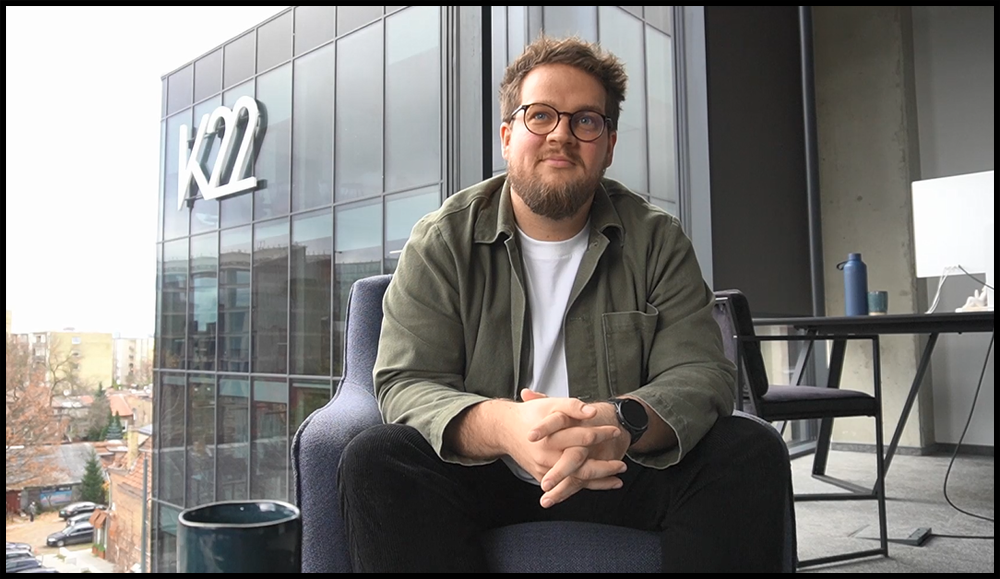
On Wednesday afternoon, I took the “Lux Express” bus to Vilnius, where the next morning I visited InRento for the first time. My conversation took place with 30-year-old Bernardas Preikšaitis, who was installed only a few weeks ago as successor CEO to founder Gustas Germanavičius.
He began by reporting on the recent change of leadership at the company and the role founder Gustas plays at the platform today as part of the credit committee. After that I had the business model of the crowdfunding platform explained to me in detail, and Bernardas was able to answer every one of my follow-up questions with specific figures. From the applications, the acceptance rate, the reasons for rejection, and the processing time.
“It will sound bad maybe, but we are taking the trash and making it not trash anymore.”
According to him, the platform received 36 project applications over the past two weeks and accepted only two of them. One reason for rejection stuck with me, namely that there has to be a healthy profit margin of more than 5% for the developer, because otherwise the incentive to let a project default is too high.
At present, the platform’s growth is still funded 100% by retail investors. For more diversification and stronger growth, however, the company is currently looking for suitable family offices in the range of 1 to 5 million euros. As with LANDE, InRento also sees itself somewhat constrained by the crowdfunding licence, with the problem lying mainly in the 5 million limit per financeable project.
Things then became interesting when the subject turned to the two problematic loans in Poland (Harfowa 10 and J48) and why these were not yet marked as defaulted on the statistics page at the time of our conversation. His reasoning rested on a quantitative threshold, under which 4% of the loan has to be in arrears before it counts as defaulted according to InRento’s definition. A week later, there were apparently conversations with the Lithuanian central bank on the matter. And lo and behold: InRento has since adjusted the classification and marked both projects as defaulted on its own site, together with a post on the individual stages of delay and how a defaulted loan is defined.
My assessment: An open conversation and a good first impression of InRento. Crowdfunding will probably never quite become my speciality, but InRento strikes me as one of the few platforms in this segment that currently knows its craft. It was also the only platform named by external executives as a positive example for real estate projects. My investment remains in place, though with a sense of proportion and in a relatively modest size.

New investors receive a €20 Bonus for a €500 investment or €50 for €1,000. The €1,000 can be invested in one or two projects.
SAVY
Straight after my conversation with InRento, I continued on to SAVY. The first surprise came on arrival, because the office sits in the middle of a residential neighbourhood. A little odd, but it certainly had its charm.
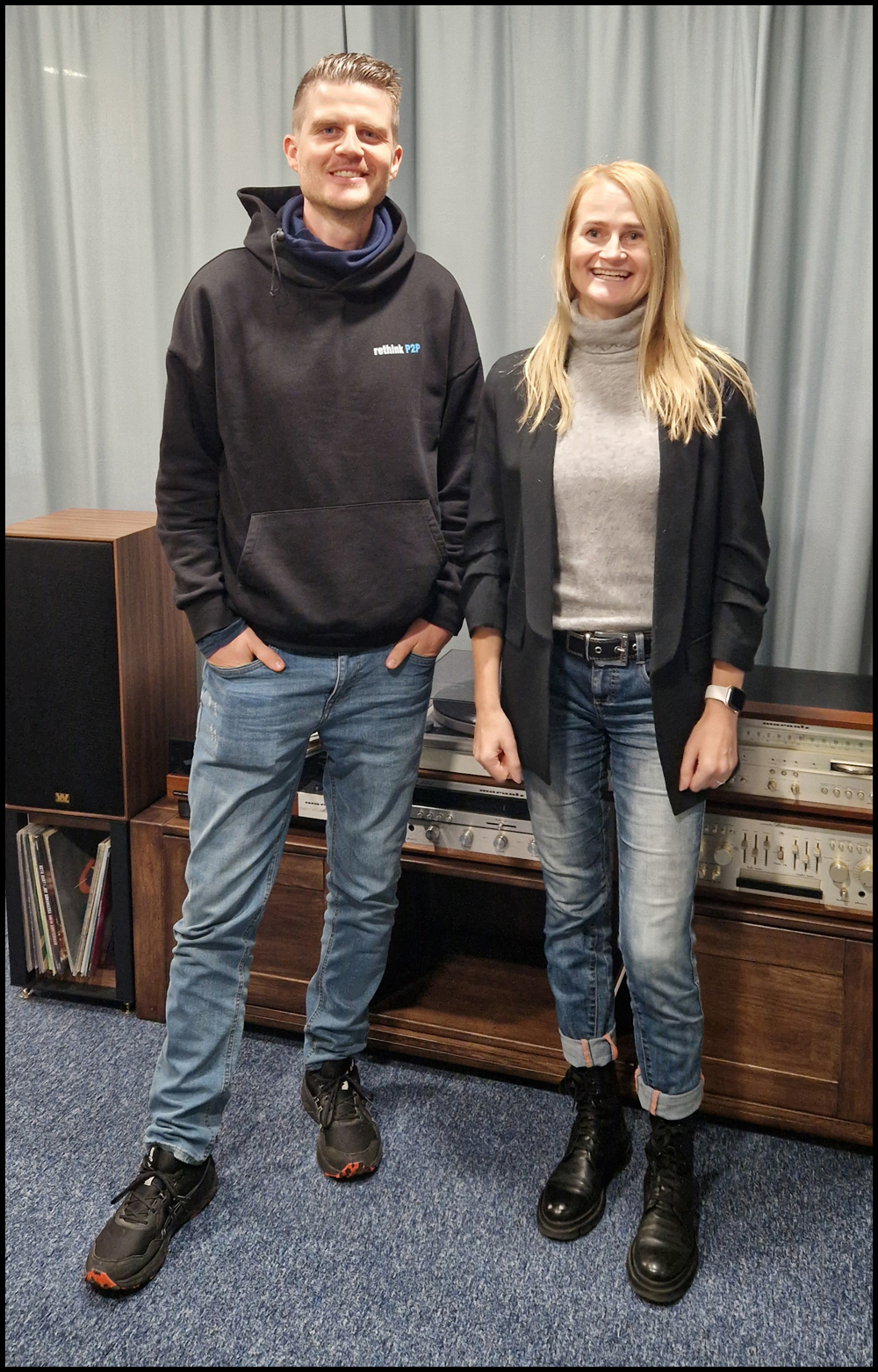 Originally planned as an informal introduction with head of marketing Audra Kondrotė, founder and CEO Audrius Žiugžda spontaneously joined as well and answered all my questions for two hours. Among other things we covered the history of Lithuania’s oldest P2P platform, active in the market since 2014, and how a founder crisis along the way, during which some had doubted the company’s ability to survive, almost cost SAVY its existence. In the autumn of 2017, however, Audrius and another founder (Vytautas Zabuls) bought out the three other shareholders, restructured the revenue model and have been on markedly more stable ground ever since.
Beyond the broad product range, consisting of consumer loans, business loans, mortgage loans and development loans, I found it interesting how heavily SAVY invests pari passu in its own loan portfolio. Of around 74 million euros, roughly 8.6 million euros is accounted for by SAVY and affiliated companies. That works out at around 12% and a decent portion of skin in the game. For consumer loans, SAVY reserves the right to fund up to 50% of the loans itself.
On the positive side, it is worth mentioning that SAVY was granted an EMI licence only recently (27 October 2026). A payment infrastructure of its own with personalised IBAN accounts is therefore planned from February 2027, and the company can finally free itself from Paysera. The difficult conditions with that payment processor are something I can relate to well from my own experience.
Further topics covered how the Investor Fund works, which SAVY uses as an alternative to a buyback guarantee, the Auro Invest allocation logic, the portfolio composition, the strongly growing real estate segment, and the balancing act between transparency and simplicity.
My assessment: SAVY left a positive impression on me. Very personal, precise, and with a healthy measure of self-criticism and self-reflection. As one of the few classic P2P platforms that originate loans themselves and also invest in them, an interesting candidate for a closer look at the business model and the investment options. As soon as I have available resources, certainly a platform for a future review on my blog.
PeerBerry
On the fifth and final day of my Baltic trip, I went to PeerBerry and Crowdpear, who work together under one roof. Here too, it was my second visit on site after 2024, although I was able to meet PeerBerry CEO Arūnas Lekavičius in person for the first time, as he had not been available back then.
We first talked at length about the two major crises in the platform’s history and how they were managed. At the start of the coronavirus pandemic, up to 600,000 euros was withdrawn in a single day, which in his view amounted to a “bank run”. No less formative for the platform was the beginning of the war in Ukraine, which hit two of the largest markets of PeerBerry’s partners at once.
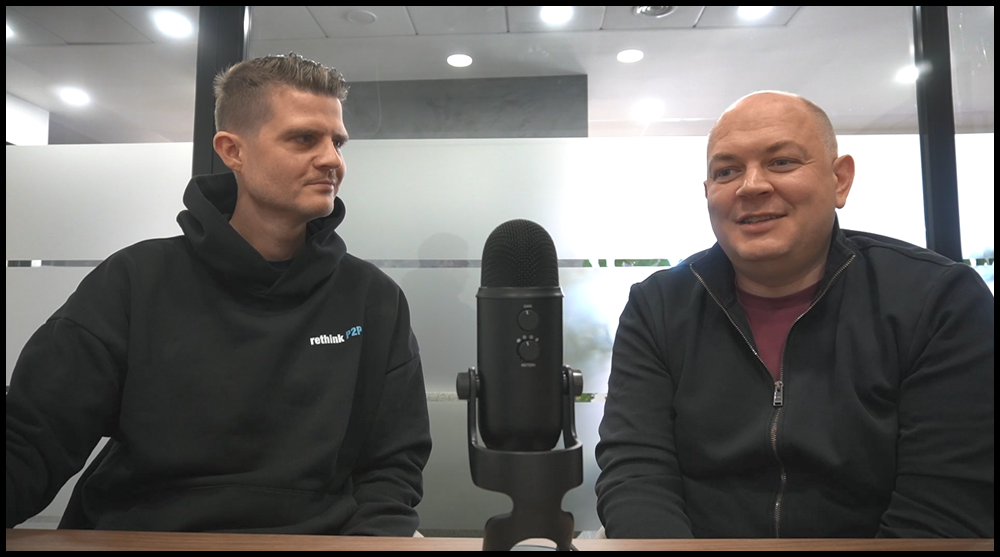
The Aventus group guarantee, frequently criticised because of the lacking access of ducoments, was now under an extremely tough stress test for the first time. Could PeerBerry and its partners have played the force majeure card? Asked whether repaying the war-affected loans was a contractual obligation or a free decision made in good will, the PeerBerry CEO gave a clear answer:
“If Aventus would want, we could tell that it’s force majeure. We could tell. But we never raised this question.”
We then talked a lot about the Aventus group guarantee. The mechanics, how robust it is and how it is documented. The answers suggested that the group could have withdrawn in exceptional situations. On two occasions, however, it did not. The mechanism therefore looks more like good conduct on the part of the owners and less like classic contractual enforceability.
As PeerBerry’s largest and closest partner, there is naturally a tight interconnection between the platform and the Aventus group. According to Arunas, he speaks with the head of Aventus twice a day, discussing new markets and the joint planning of all cash flows. Is there still any autonomy in this form, in which PeerBerry can assess and if necessary reject new lenders independently of Aventus? According to the PeerBerry CEO, there are certainly different opinions from time to time. In reality, though, one should assume that the Aventus group will set the pace and can make the ultimate call.
My assessment: PeerBerry has now been in the market for nine years and, despite all the crises and controversies, is one of the market leaders in the entire sector. Hence, there is hardly a more fitting saying for the platform than “actions speak louder than words”. Even though one should always try to keep a critical distance, the conversations with the team on cross-platform topics showed me once again how well the company understands the market environment, and why PeerBerry has been by far the largest position in my P2P portfolio for many years, and will remain so for the time being.

New investors receive 0.5% cashback on all investments made within the first 90 days after registration.
Crowdpear
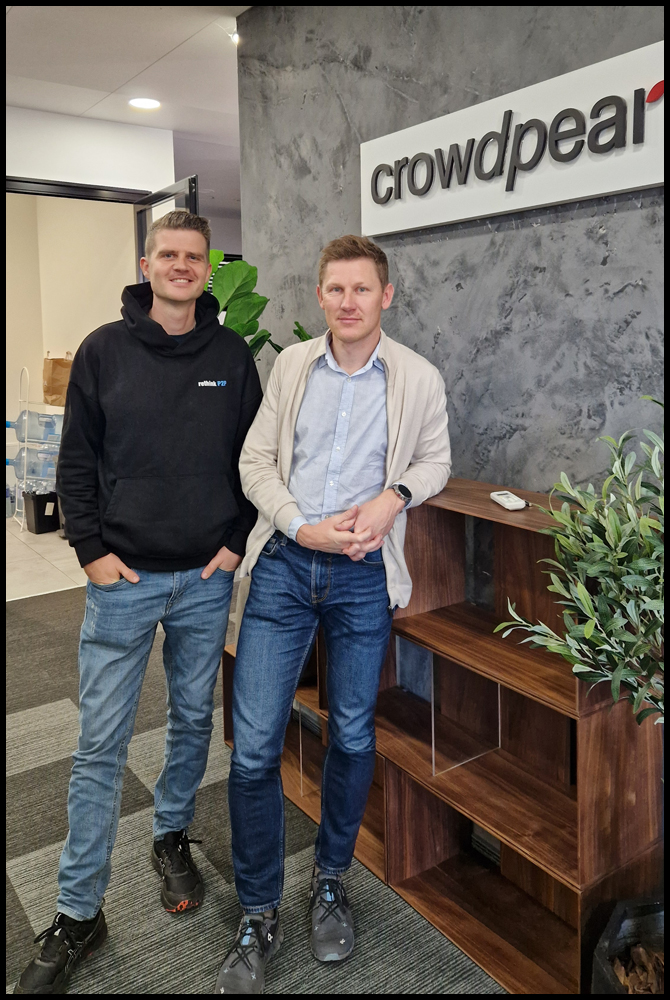 For the second part of my visit, I spoke in a little more depth with Donatas Mickus, who has only been working for Crowdpear for a few weeks and who was installed as the official CEO of the Crowdpear platform a few days before my visit.
Talking about his professional background, he told me about his time in the classic banking sector, where he worked for ten years and was heavily involved in sales. He was open in saying that real estate project finance is therefore new territory for him and that he still has a lot to learn (“Not my cup of tea, a lot to learn.”).
He was recruited, incidentally, by PeerBerry CEO Arūnas personally. The two knew each other from a shared office complex, in which PeerBerry, Aventus & Co. have by now taken up three floors.
Currently, around 70% of the portfolio comes from Lithuania. Donatas’ task is to drive growth in Portugal and Romania. On the differences between those markets, he said he had already observed that developers in Portugal and Romania are much more willing to provide personal guarantees, which is rather unusual in Lithuania.
My assessment: In my view, the new Crowdpear CEO made a solid first impression, although you can tell that he still needs to work his way deeper into his new worki environment. For further conversations it would certainly be interesting to understand what the assessment and decision-making process looks like in detail. For lack of time, and after five days also for lack of energy, we did not get to that point.

New investors receive 1% cashback on all investments made within the first 90 days after registration.
Conclusion of my Baltic trip 2026
Including Sunday, it was six exciting but also demanding days in the Baltics, during which I also found time outside the platform meetings to nurture a few private contacts, among them finance YouTuber Nik Navarskij and former Debitum founder Martins Liberts.
All in all, though, it was far too much for my social battery, for which in the end I can only blame myself. Initially planned as a relaxed and easy-going trip, I gradually scheduled too many meetings, accepted too many and in part had to cancel them again. Some things I will probably never learn.
In terms of content, I found many of the conversations highly instructive. Between regulation, loan supply, growth financing and new innovations, every platform has its own focus and its own views. And even though in the end I trust hard numbers more than warm words, communication with the decision-makers in the background is always an instructive element too, one you can factor into your assessment.
The “human factor” cannot talk a bad business into being a good one, but the corridor of perception for the overall situation can certainly open up new insights and perspectives.
Particularly exciting for me was my newly introduced “Q&A” format, in which I put together 15 to 20 short questions to all eight CEOs, in part identical ones, which had to be answered promptly and spontaneously. The evaluation is currently in editing stage and will be published on the YouTube channel next week.

Hi, I'm Denny, founder of re:think P2P. I have been investing in P2P lending myself since October 2017 and writing about it here since January 2019. My goal is to question marketing claims, assess developments critically and give investors an honest, independent view.
To do that I actively track more than 30 platforms: financial results, ownership structures, regulation and loan quality. Out of this come platform reviews, portfolio updates and my own Risk Score, which makes platform risk comparable. Every review and my portfolio page state transparently whether and how much of my own money is invested.