
Last Update: 29 September 2026
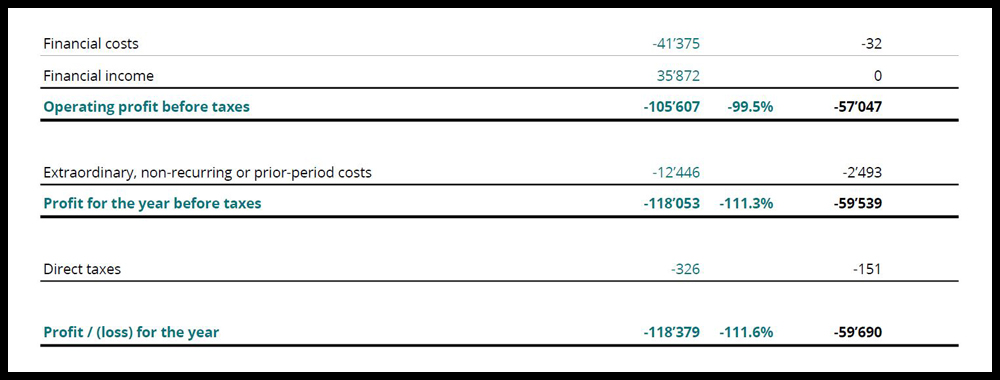
I have never been invested in Maclear with my own funds. Based on the platform's current risk profile, I advise against investing. This article is therefore deliberately not promoted through affiliate links. Further analyses of other platforms can be found on my P2P Platform Review page. The blog also features an overview of the best Maclear alternatives in 2026. Maclear is a crowdfunding platform registered in Switzerland that allows investors to invest in international SME loans. The platform promotes above-average returns of up to 15.6%. Maclear began operations in May 2023 and therefore ranks among the younger and more inexperienced platforms in the P2P lending space. The registered office in Switzerland is a notable peculiarity in Maclear’s case. Neither the shareholders have any connection to Switzerland, nor are there any Swiss projects or borrowers, and the platform’s operational activities are managed from the Baltics. This strongly suggests that the location was chosen strategically in order to circumvent the European Crowdfunding Service Providers regulation (ECSP). The misleading and, in some cases, falsely presented information on the loan projects also raises serious doubts about the credibility and trustworthiness of Maclear’s business model. More on this can be found in my Maclear review. All key facts and figures about Maclear at a glance. P2P lending is a dynamic asset class where investors should stay continuously informed. You will find the latest news on Maclear on my P2P lending news page, where I cover other P2P platforms as well. The operator of P2P Empire has recently investigated a review website called CrowdIndex. The site ranks Maclear as the best P2P platform in Europe with a score of 9.2 out of 10. The investigation suggests that the website may not be independent but instead forms part of Maclear's own marketing infrastructure. The domain was registered only at the end of May 2026, yet it already displays alleged user reviews dating back to October 2024. In addition, none of the nine listed editors can be found outside the website, while their profile photos show characteristics commonly associated with AI-generated images. The German-language legal notice ("Imprint") is also empty. Even more significant are two technical findings. First, all links to Maclear and its partner platform 8lends contain the companies' own internal campaign parameters rather than the affiliate IDs typically used by independent affiliate networks. Second, CrowdIndex and maclear.ch share the same Google Analytics property and are connected through cross-domain tracking. Switzerland-based crowdfunding platform Maclear has, against all expectations, now released at least some figures for the 2024 (!) financial year. Up front: My earlier criticisms continue to be confirmed. On top of that, there are also a few new and concrete warning signs. Here are the key findings. On the formalities: According to the CFO's letter, the report is "in the final stage of audit". So, this is yet another audit announcement, just like the one in 2023 involving BlueAudit, which was never followed through. Once again, all that exists is a self-prepared, unaudited draft. According to the figures, Maclear posted a net loss of CHF −122,941 in 2024. This reflects a similar loss level as for 2023 (CHF −118,379). Despite a capital increase of CHF 55,000, equity fell from CHF −19,085 to CHF −87,026. The CFO frames this as the "cost of growth", whereas the balance sheet simply says: Negative equity, effectively balance-sheet over-indebtedness. But it only gets really interesting now. According to Maclear, borrowers paid CHF 464,322 in interest. Investors, by contrast, received CHF 530,266 in interest plus CHF 297,583 in bonuses. The platform therefore pays investors around CHF 363,527 more than it collects from borrowers in interest, covering the gap from commission and onboarding fees. Normally, the interest charged to borrowers is higher than the interest paid to investors. This inversion, combined with cross-subsidization through a steady stream of new onboarding fees, is the profile of a model that only works as long as growth continues. The wording that borrowers' payment discipline does "not always exactly" match the schedule is a thinly veiled confirmation of payment delays. These are concerns I had already laid out in detail in my Maclear review. The CFO also claims that borrowers hold assets to repay their loans. My research has shown that quite the opposite has been the case in the past (Transbaltika: Fixed assets of EUR 72,569, no truck purchased; Estlat: No tangible assets; TLMET: No plasma cutter). If loans are nevertheless "repaid" even though the debtors have neither revenue nor collateral, then the negative spread suggests that the funds come from new investor money and fees, rather than from the borrowers' operating cash flow. In this context, it also seems notable that Maclear has set aside a reserve of only CHF 195,456 for possible loan losses. That corresponds to just around 2% of the loan portfolio outstanding at the end of 2024. Given the inflated valuations and missing collateral documented across several projects, this coverage appears extremely low. Any impairment beyond the reserve would, however, further worsen the already negative equity. Alternatively, you can subscribe to my Telegram channel or WhatsApp group (both free of charge) to receive real-time updates as soon as new developments emerge. Who are the main shareholders and management executives behind Maclear? Let’s have a look! Maclear AG was originally founded on May 11, 2010. At the time, the company operated in the GRC software sector (Governance, Risk, Compliance). In 2020, the company was acquired by the two business partners Aleksandr Nikitin and Denis Ustjev, who each hold 50% of the shares in the Swiss company. He has several years of experiences in the international banking sector, where he e.g. has worked in management consultancy. He originally came up with the idea of a Swiss crowdlending platform. He has been CEO of Maclear’s operational activities since August 2020. When evaluating a P2P platform, investors should take a very close look at the potential risk factors. What should you look out for at Maclear? What are the risks and how can they be assessed? The P2P platform is operated by the Swiss company “Maclear AG.” This company is regulated by the General Self-Regulatory Organisation PolyReg. PolyReg is an officially FINMA-recognised self-regulatory organisation (SRO) pursuant to Article 24 of the Swiss Anti-Money Laundering Act (AMLA). In short, the organisation supervises financial intermediaries that are members of it. Overall, PolyReg is considered reputable and regulatorily sound, with a clear integration into the FINMA-led system for combating money laundering. With regard to its effectiveness, it should be noted that PolyReg primarily monitors compliance with due diligence obligations under the AMLA (identification requirements, suspicious activity reports, documentation, etc.), but not financial market stability or investor protection. In this respect, the organisation cannot be compared to a traditional financial supervisory authority that is active in prudential or risk supervision. It is therefore legitimate to question why Maclear chose Switzerland as its location in the first place. The shareholders have no connection to Switzerland, no projects from Switzerland are offered, and the operational activities are managed from the Baltics. This raises the suspicion that the location was strategically chosen in order to circumvent potential regulations under the European Crowdfunding Regulation (ECSP). Since Switzerland is not an EU member state, the Maclear platform does not fall under the European Crowdfunding Regulation. Exploiting regulatory gaps exposes investors to additional and avoidable risks. Maclear is currently not profitable. According to the unaudited financial statements, the company recorded a loss of CHF 118,379 in the 2023 fiscal year. Originally, Maclear AG had communicated that the financial report would be audited by BlueAudit, which, however, did not happen. It is also questionable why the 2023 financial report was only shared in the Maclear Telegram group in June 2025 and was not made publicly accessible. The file name (“20240417_Maclear_AG_Annual_report_2023”) further suggests that the report was created as early as April 17, 2024, yet it was only published more than a year later. As of today (December 2025), no financial statements have been released for the 2024 fiscal year. Maclear finances high-interest SME loans across different industries and legal jurisdictions. The complexity of this business model carries significant risks, which should also be reflected in the default rate. The problem: the platform does not publish meaningful statistics on the performance of the outstanding loan portfolio, and in particular, no data on non-performing loans. In the past, no comparable platform has been able to operate such a business model successfully over the long term without sufficient transparency. When assessing Maclear, a recurring pattern stands out: the public perception of the platform is artificially influenced in several places. This applies both to the comment sections of independent P2P communities and, according to a recent investigation, to a supposedly independent review portal. Both cases are documented below. Maclear uses bots and PR agencies to artificially increase its brand presence in online communities. Both this blog and the YouTube channel have been affected. This approach appears unprofessional and further raises doubts about the credibility of the platform. In July 2026, the operator of P2P Empire published an investigation into a review portal called CrowdIndex, on which Maclear is listed as Europe’s best P2P platform. The rating of 9.2 points was awarded by a supposedly independent team of experts. The investigation documents a series of irregularities. Among other things, the domain was only registered at the end of May 2026, yet displays user reviews that supposedly date back to October 2024. Furthermore, none of the nine listed editors can be found anywhere outside the site, while the portrait photos show characteristics of AI-generated faces. The German-language version also features an empty legal notice. Two technical findings carry considerably more weight: all links to Maclear and to the partner platform 8lends contain their own internal campaign parameters, not the affiliate IDs of a neutral network. In addition, CrowdIndex and maclear.ch feed into the same Google Analytics property and reference each other via cross-domain linking. An ordinary affiliate partner receives a link, but no place in the analytics infrastructure of the company being promoted. The findings therefore suggest that CrowdIndex is not operated independently of Maclear and 8lends, but is part of their own marketing infrastructure. Combined with the documented use of bots, this reveals a consistent pattern of artificial reputation building. The loans on Maclear contain numerous incorrect and misleading pieces of information, raising doubts about the platform’s credibility. An overview: Maclear does not publish performance-relevant data on the development of the managed loan portfolio. The platform only states that, so far, there has been one defaulted loan. This concerns the Italian company Vibroedil S.R.L. According to official registries, the company has specialized in the production and trade of construction materials and building products since 1980. Through Maclear, EUR 150,000 was financed in three tranches of EUR 50,000 each. While the project is no longer accessible on Maclear’s website, it can still be viewed via the partner platform 8lends. What stands out: the financial figures listed for Vibroedil on 8lends are completely different from the numbers in the official Italian company registries. On 8lends, a revenue of EUR 15.9 million and a net profit of EUR 144,390 for 2024 are reported. According to an official Italian registry, Vibroedil shows only a revenue of EUR 6.4 million and a loss of EUR 1.9 million. The platform thus shared false and misleading information with its investors. Only a few months after the financing via Maclear (April 2025), Vibroedil officially filed for insolvency on July 22, 2025. Maclear only communicated this insolvency on October 15, 2025, after the loan had already been fully repaid. Additional irregularities: The project description mentions a loan of EUR 600,000, secured by a combination of real estate, inventory, and equity, with a total collateral value of EUR 6.1 million, implying a multiplier of 40 (considering a loan of EUR 150,000, not EUR 600,000). Although there should have been sufficient assets for liquidation, Maclear stated that an amicable agreement with the borrower was reached and that the loan was repaid with personal funds. Many Maclear projects show incorrect and misleading figures. Another example is the Estonian company Estlat Building Co OÜ, a manufacturer and supplier of prefabricated wooden construction products. The loan was financed in August 2023 and repaid in August 2024. The Estlat pitch on Maclear: The Estonian company, which supposedly has 12 employees, wanted a EUR 400,000 loan to acquire technical equipment, hire new specialists in construction and project management, and cover marketing and business development costs. For fiscal year 2023, projected revenue was EUR 1.65 million, and for 2024 EUR 1.97 million. The reality is very different. According to the financial statements for 2023 and 2024, available via the Estonian business registry, this is what the situation actually looks like: Conclusion: Estlat was completely overvalued and misrepresented on Maclear. It also remains questionable how the liabilities to Maclear were settled, given that the company generated negligible revenue and held no tangible assets. Between September 2024 and November 2024, Maclear collected nearly EUR 300,000 in investor funds for a loan to the Estonian company Transbaltika OÜ. The Transbaltika pitch on Maclear: The company is described as a logistics and freight transport business, founded in October 2001 in Tallinn. It allegedly provides freight transport services for both legal entities and private individuals, using its own fleet of vehicles. Through Maclear, the company sought a loan of EUR 350,000 to finance a MAN TGX truck (stated value: EUR 287,000) and a special trailer with a 40-ton capacity (stated value: EUR 172,500). The remaining EUR 109,500 was to be covered by Transbaltika from its own funds. The projection: EUR 856,000 in revenue and EUR 652,000 in cash flow within one year after securing the loan. The reality, based on the 2024 financial statements, is different. Once again. Transbaltika generated only EUR 82,922 in revenue in 2024, less than one-tenth of the projected figure. Adding up the company’s revenue from 2021 to 2024 gives a total of around EUR 350,000 over four years, still less than half of the advertised annual revenue. But it gets worse. The balance sheet lists total fixed assets at EUR 72,569. This suggests that, despite the financing via Maclear, neither the truck nor the trailer were actually purchased. The question remains: What was the money ultimately used for, and how was the loan repaid? Repayment from the company’s operational activities appears impossible. The Estonian company TLMET OÜ, which specializes in the production of metal structures, has previously appeared on Maclear with multiple financing rounds. So far, all loans have been repaid. The TLMET pitch on Maclear: The company seeks a loan of EUR 460,000 to modernize its workshop and enable further business growth. The stated allocation of funds is as follows: purchase and implementation of a modern plasma cutter (stated value: EUR 280,000), equipping the workshop (EUR 120,000), acquisition of production materials and hiring of additional personnel (EUR 110,000). In each phase, the company intends to raise EUR 100,000 until the full loan amount of EUR 460,000 is reached (EUR 50,000 from its own funds). The 2024 financial statements reveal little evidence of the intended investments. Fixed assets amount to EUR 195,510. No trace of the modern plasma cutter. Instead, the company shows sharply declining revenues and negative equity for the second consecutive year. Maclear presents itself as a Swiss crowdfunding platform where investors can earn above-average returns by investing in international SME loans. At first glance, Maclear appears to be an attractive P2P platform for yield seekers. However, on closer inspection, fundamental weaknesses emerge that significantly increase the risk of investing. Particularly striking is the company’s registered office in Switzerland. Neither the shareholders nor the operational activities have a real connection to the country, nor do the platform’s projects. It appears that the location was deliberately chosen to circumvent the stricter regulatory requirements of the European Crowdfunding Service Providers Regulation (ECSP). This places Maclear in a regulatory grey area, exposing investors to additional risks. Transparency on the platform is also severely lacking. Key metrics on the loan portfolio, especially regarding non-performing loans or actual performance, are not published. Without this information, investors cannot assess default rates or the true stability of the portfolio. Another red flag is the platform’s online activity. Maclear uses bots to artificially boost brand presence in online communities. This approach appears unprofessional and further undermines the platform’s credibility. An investigation by P2P Empire from July 2026 also suggests that a supposedly independent review portal, which lists Maclear as Europe’s best P2P platform, is operated from within the sphere of Maclear and its partner platform 8lends. Artificial reputation building is therefore not an isolated incident, but a recurring pattern. Equally concerning are the numerous inconsistencies in the financed projects. Examples such as Vibroedil, Estlat Building, and Transbaltika reveal significant discrepancies between the figures provided by Maclear and the actual company data from official registers. Overstated revenue projections, false employee numbers, or nonexistent collateral are not isolated incidents but a recurring pattern. Overall, these factors lead to a very critical conclusion. The combination of regulatory grey areas, lack of transparency, artificial online presence, and numerous project misrepresentations makes investing on the platform difficult to justify. Due to these structural risks, investing in Maclear is currently not recommended. Instead, investors should take a look at the best Maclear alternatives in 2026. Maclear is a Switzerland-registered crowdfunding platform operational since May 2023, where investors can invest in international SME loans with an advertised return of up to 15.6%. Neither the shareholders nor the operational activities have any real connection to Switzerland. Maclear is supervised by the Swiss self-regulatory organisation PolyReg. However, this body exclusively monitors compliance with anti-money laundering regulations and does not provide investor protection. As Switzerland is not an EU member state, Maclear does not fall under the European Crowdfunding Regulation (ECSP). The platform does not publish meaningful statistics on portfolio performance or non-performing loans. In addition, several financed projects have shown serious discrepancies between Maclear’s stated figures and official company data, including false revenue numbers, inflated headcounts, and non-existent collateral. No. According to unaudited financial figures, Maclear posted a loss of CHF 118,379 in 2023. The report was not audited despite prior announcements and was only published more than a year after its creation. No figures for 2024 have been released to date. Due to the regulatory grey zone, lack of portfolio transparency, and recurring irregularities in financed projects, I currently advise against investing on Maclear. Investors looking for alternatives can find an overview of the best Maclear alternatives in 2026 on my blog. An investigation by P2P Empire from July 2026 documents that the CrowdIndex portal, which lists Maclear as Europe’s best P2P platform, is only a few weeks old, features a non-existent editorial team and, according to its own press page, awards paid rankings. Technical findings such as a shared Google Analytics property suggest that the portal is not operated independently of Maclear. I’m Denny Neidhardt, the founder of re:think P2P. On this blog, I help retail investors make smarter, well-informed investment decisions in the world of P2P lending. Since 2019, I’ve been publishing in-depth analyses, platform reviews, and risk assessments to bring more transparency to this investment space. My goal is to challenge marketing claims, question developments, and empower investors with honest, independent insights.
What is Maclear?
Maclear at a Glance
Started:
May 2023
Legal Name:
Maclear AG (LINK)
Headquarter:
Wallisellen, Switzerland
Regulated:
Yes (Self Regulatory Organization)
CEO:
Denis Ustjev (August 2020)
Assets Under Management:
EUR 94.3+ million
Number of Investors:
48,000+
Expected Return:
Up to 15.6%
Risk Score:
1.8 / 10 (Rank 27 of 31) | View Methodology
Primary Loan Type:
Business Loans
Maclear News
Shareholder and Management
Shareholder
Maclear Management
 Denis Ustjev is the CEO of the Maclear P2P platform.
Maclear Risk Elements
Red Flags -21
Regulation
Profitability
Transparency
Manipulated Online Presence
Bots

CrowdIndex
Questionable Loan Projects
Vibroedil S.R.L.
Estlat Building Co OÜ
Transbaltika OÜ
TLMET OÜ
Summary Maclear Review
FAQ Maclear Review